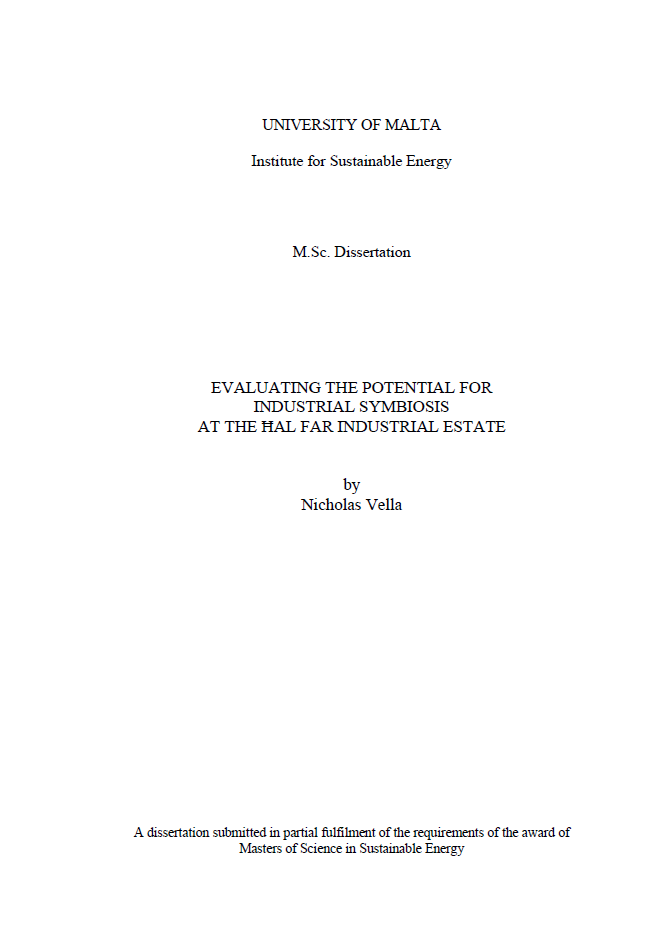
Summary: This dissertation examines how industrial symbiosis can support the transition from a linear to a circular economy within a local industrial cluster. It highlights that industrial symbiosis requires active facilitation to identify collaboration opportunities, create communication channels between companies and demonstrate the benefits of resource exchange. The study develops a methodology based on resource mapping, opportunity discovery and the realisation of symbiotic relationships. It focuses on three areas: collaborative capacity, energy resources and material resources. The results identify significant potential for resource recovery, including around 106 MWh per week of thermal energy recovery and carbon footprint savings from material exchanges, both from new opportunities and existing symbiotic relationships. Overall, the research shows the importance of technical capacity, data collection and a central facilitator in turning industrial symbiosis potential into practical circular economy outcomes.
Keywords: industrial symbiosis; circular economy; resource mapping; industrial cluster; facilitation; energy recovery; material recovery; carbon footprint reduction; symbiotic relationships; resource efficiency.